

Giving Illustrator’s Turntable a Spin
April 1, 2026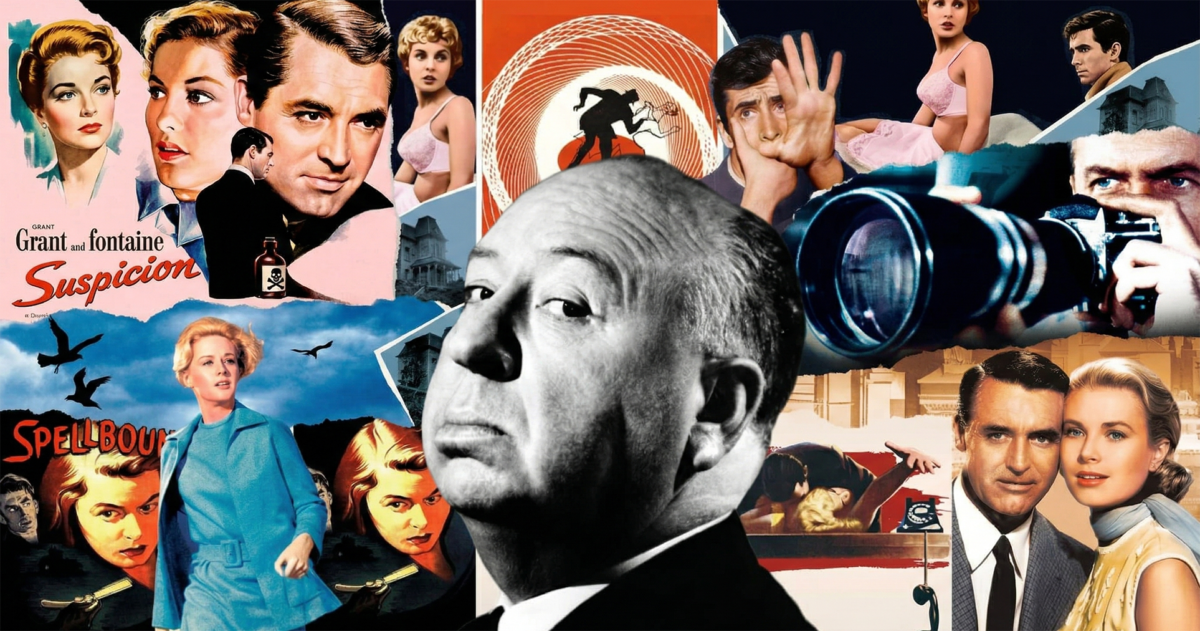
Being Like Hitchcock: Curating a Life of Work
At some point in my career, I stumbled onto an interesting perspective regarding work as a reflection of identity. As a professional designer (or many other professions I’m sure), I think there’s a natural tendency to feel our value is commensurate with whatever we are working on at a given time; we want the work to be creatively challenging and fulfilling, to demonstrate our value, and to encapsulate our skills and tastes, particularly for major projects we’re expected to commit months or even years to. On the other hand, if we’re stuck working on something tedious, less rewarding or less visible, it can feel like a slog, a waste of time that never ends, and can take a toll on one’s self-esteem. But a couple decades into my design journey, I discovered an analogy that helped me take stock of the big picture with a healthier mindset.
The Director’s Lens My first critical exposure to Alfred Hitchcock was an undergrad Comparative Lit class I took called “How to Read a Film.” We were given an assignment to discuss the famed director’s implementation of narrative point of view in his 1941 classic Suspicion, starring Cary Grant and Joan Fontaine. I became deeply immersed in both the assignment and the film, which led me down a rabbit hole of digging deeper into Hitchcock’s filmography. Mind you, this was before streaming, so if I couldn’t rent it at my local video shops or catch a TV broadcast, I was out of luck. To date, I’ve seen most of his films but not all, which is kind of cool actually, since it means there are still unseen treasures for me to discover.
On a separate tangent, one day I was daydreaming about “definitive works” of prominent figures in the arts; In other words, if I could pick only one piece to epitomize the life’s work of a given artist in any field, what might it be? For example, van Gogh’s Starry Night is pretty universally recognized as both well-known and generally representative of his accomplishments. For the band Queen, it might be Bohemian Rhapsody. And so on.
However, when I tried to apply this analogy to Hitchcock, I was stuck. Rear Window is my all-time favorite film, but I don’t think it adequately sums up who he is as a director on its own; it’s a masterpiece built on themes of voyeurism and economy of space, and represents one of his many dimensions. In contrast, consider something like Psycho, a gritty modernist slasher film that fundamentally changed the horror genre. And then there’s Rope, a brilliant technical experiment produced to play out as a single continuous scene. Or To Catch a Thief, a romantic comedy caper; or North by Northwest, often cited as the first true modern action film. These are just a few examples of the stylistic and narrative versatility evidenced throughout his career. In reality, Hitchcock is the sum of his experiments, his technical obsessions, and his evolution. To represent him, you have no choice but to take a much larger sample of his entire filmography into account.
Self-Reflection When I shifted my perspective tos imagine my own career through a similar lens (pun intended), it was eye opening and liberating. I stopped seeing projects as “successes” or “failures” and started seeing them as frames in a sequence.
- Projects become experiments: Instead of “Will this be my best work?” the question becomes “What can I learn here that adds to my toolkit?”
- Versatility becomes a signature: Much like Hitchcock moved from silent film to Technicolor, moving between “creative lanes,” from UX to 3D to physical making, isn’t a lack of focus. It’s building a richer filmography.
- The “Accrual” of Craft: Every project is an opportunity to let new skills accrue. Over time, these individual frames stitch together to create a professional reputation that has depth, soul, and a distinct “voice.”
The Long Game The beauty of the Hitchcock analogy is that it grants you permission to be curious. It allows you to “break things” and iterate in small, concrete steps. In the end, you aren’t defined by the one project that went viral or the one title on your business card. You are defined by the thread that connects everything you’ve built. You aren’t just a practitioner; you are the auteur of a life of work.